

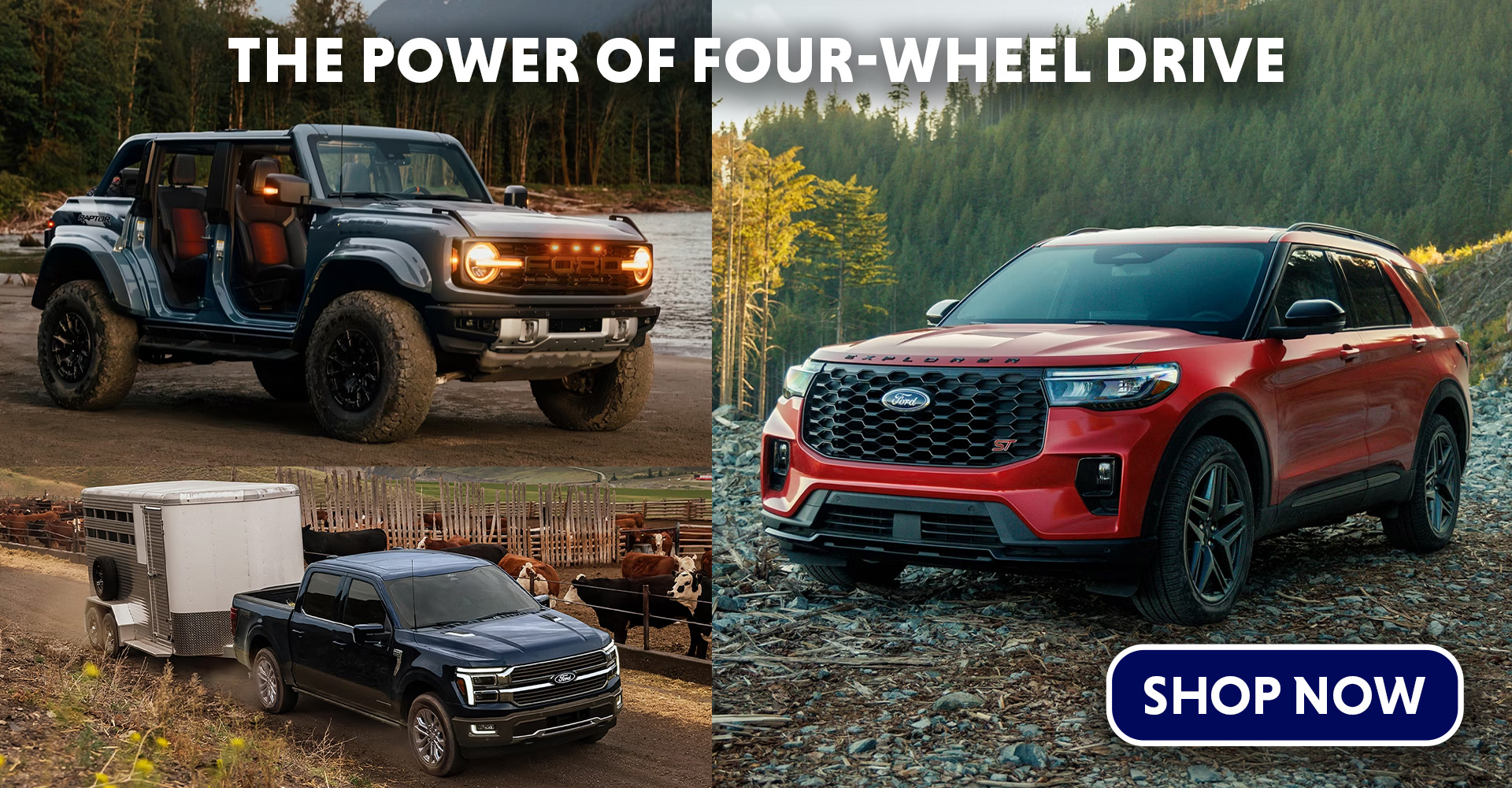
Handling Real Driving Conditions
A Ford with four-wheel drive can feel simple until the road turns from dry pavement to slush, then to packed snow, then back to wet asphalt in one drive. For drivers looking to understand when to use the 4A, 4H, or 4L drive modes, the real question is not which setting is stronger, but which one best matches the surface, speed, and amount of control you need. Many Ford models, including the Ford F-150, Ford Explorer, and Ford Bronco, offer four-wheel-drive options, providing drivers with enhanced traction and control on various terrains. The answer matters because four-wheel-drive modes are not interchangeable, even though they all send power through the transfer case. This guide from Palmetto Ford explains when to use the 4A, 4H, and 4L drive modes, what each mode actually does, where drivers get into trouble, and how to make smarter choices on snow, ice, gravel roads, dirt roads, mud, sand, steep grades, and low-speed off-road driving.
Ford Driving Modes in Real-World Driving
Ford 4WD systems improve traction, stability control response, and driver confidence when conditions change faster than road signs can keep up. Knowing when to use 4A, 4H, and 4L matters because the wrong mode can change handling, create driveline binding in some systems, or add unnecessary strain to the front axle, rear axle, and transfer case. Availability also varies by Ford model, trim, and hardware, including whether the vehicle uses Electronic Shift-On-The-Fly or a two-speed transfer case with automatic capability. A Ford F-150 and a Ford Bronco may offer similar mode names, but exact behavior, shift conditions, and 2H access still depend on the specific model.
What 4A Means and What It Actually Does
Ford 4A mode, or 4WD auto, is an automatic, on-demand setting that adjusts torque between the rear axle and front axle when wheel slip is detected or anticipated. That makes 4A the most practical answer for mixed traction, because it preserves normal-road comfort while still reacting to wet pavement, patchy ice, slush, or intermittent snow. In real use, 4A is often the least time-consuming mode because it reduces the need to constantly switch between 2H and 4WD as conditions change. For many drivers asking when to use 4A, 4H, and 4L, 4A is the everyday choice for uncertain roads rather than a specialty mode for deep off-road terrain.
When 4A Is the Right Call
4A fits plowed roads with icy patches, shaded canyon roads where black ice appears without warning, wet-to-dry transitions, and gravel-to-pavement commutes around Charleston, SC. That is why when to use 4A, 4H, and 4L usually starts with 4A for changing traction, especially when the surface alternates between grip and slip. 4A also works well when a route includes mountain roads with exposed pavement in one section and shaded sections with black ice risk in the next. An automatic mode is valuable here because changing conditions punish delayed driver inputs more than they reward constant manual switching.
When to Avoid 4A
4A isn’t always the right answer when the surface is consistently loose, and you want a more locked-down, steady four-wheel-drive feel. If you are on prolonged deep snow, sand, mud, or rough trails, 4H or 4L may be more appropriate, but the owner’s manual should make the final call for your specific Ford system.
What 4H Means and When It’s the Practical Choice
4H is short for 4WD high, which uses the high range to provide stronger, steadier traction on slippery or loose surfaces while still allowing normal driving speeds, unlike 4L. For many Ford trucks and SUVs, 4H is the practical choice on packed snow, deeper snow, dirt roads, shallow mud, and loose gravel where you need more than occasional front-axle assistance. The key distinction is that 4H is built for traction consistency, not dry-pavement convenience. When drivers ask, “When do I use 4A, 4H, and 4L?,” 4H usually becomes the answer once the road stays snow-covered or loose long enough that an on-demand system is no longer the simplest fit.
4H on Snow and Ice
4H can feel more planted than 4A on consistently slick roads because torque delivery is more direct and predictable. That confidence can be useful on packed snow and unplowed sections, but 4WD does not reduce stopping distance, so winter tires, all-terrain tires with real tread depth, and smooth inputs still matter more than the selector position.
4H on Gravel and Dirt Roads
On gravel roads and dirt roads, 4H can reduce wheelspin when accelerating from a stop or climbing loose grades. The practical benefit is not speed but stability, because less wheel slip usually means less sideways drama on washboard surfaces and fewer traction-control interruptions.
What 4L Means and Why It’s Not Just “More 4WD”
4L means 4WD low, which uses low-range gearing for maximum torque multiplication and low-speed control. When to use 4A, 4H, and 4L becomes clearest here: 4L is for steep grades, deep mud, deep sand, ruts, rock crawling, and recovery situations where careful movement matters more than momentum. The trade-off is speed: low-range gearing changes throttle response and limits how fast the vehicle can travel. 4L is not a stronger version of 4H for normal roads; it is a controlled-movement tool for difficult terrain and slippery low-speed pulling.
Common 4L Scenarios Drivers Actually Face
4L makes sense on steep, loose climbs, rough descents on two-tracks, deep snow berms at the end of a driveway, and trailer maneuvering on a slippery incline. In each case, the real advantage is precision, because controlled torque helps prevent spinning, digging, and sudden surges.
How Shifting Into 4L Typically Works
Many Ford vehicles require low speed and neutral for 4L engagement, and the instrument cluster indicator lights confirm when the shift is complete. Exact steps vary by transfer case and model, so if the vehicle uses 4×4 buttons or a 4×4 selector dial, the owner’s manual remains the only authority.
The Real Differences Drivers Feel
The simplest way to separate these modes is by traction consistency and speed. 4A suits changing conditions, 4H suits consistently slippery or loose surfaces at higher speeds, and 4L suits slow crawling where torque and control matter most. Drivers also feel the difference in steering and turning behavior. When to use 4A, 4H, and 4L is partly a handling question, because locked 4WD behavior on high-traction surfaces can create hopping, tire scrub, and driveline binding that 4A is designed to avoid.
4H vs. 4L in Plain Language
Think of 4H vs. 4L this way: if you need momentum and moderate speed, choose 4H. If you need slow, measured torque to climb, descend, or extract the vehicle, choose 4L.
When to Use Each Mode by Driving Condition
Snowy roads, slush, and patchy ice usually favor 4A because traction changes every few seconds, and the system can react without forcing the driver to manage constant mode changes. Move to 4H when the road is consistently snow-covered or unplowed, and remember that ABS helps maintain steering under braking but cannot overcome poor tire tread depth or excess speed. Mountain roads and steep grades usually call for 4H on steady loose climbs and 4L on very steep, rough, low-speed sections where control matters more than pace. That distinction explains when to use 4A, 4H, and 4L better than any label, because the right mode is usually determined by surface consistency plus speed.
Mud and Rutted Two-tracks
For drivers asking 4H or 4L for mud, the answer depends on depth and speed. Use 4H for shallow mud where some momentum helps, and use 4L for deep mud, ruts, or crawling situations where spinning the tires would only dig the vehicle deeper.
Sand and Dunes
If you are asking whether 4H or 4L is better for sand, 4H is often preferred because sand driving usually depends on momentum. 4L is useful when starting from a stop, climbing slowly, or handling recovery at low speed, though tire pressure and careful throttle control often matter more than mode choice alone.
Gravel Roads, Washboard, and Dirt Trails
Use 4A on mixed paved and gravel routes, 4H on consistently loose gravel or dirt, and 4L only for slow technical sections. That progression reflects how Ford systems are designed to balance handling, traction control strategy, and mechanical load.
Towing or Pulling at Low Speed
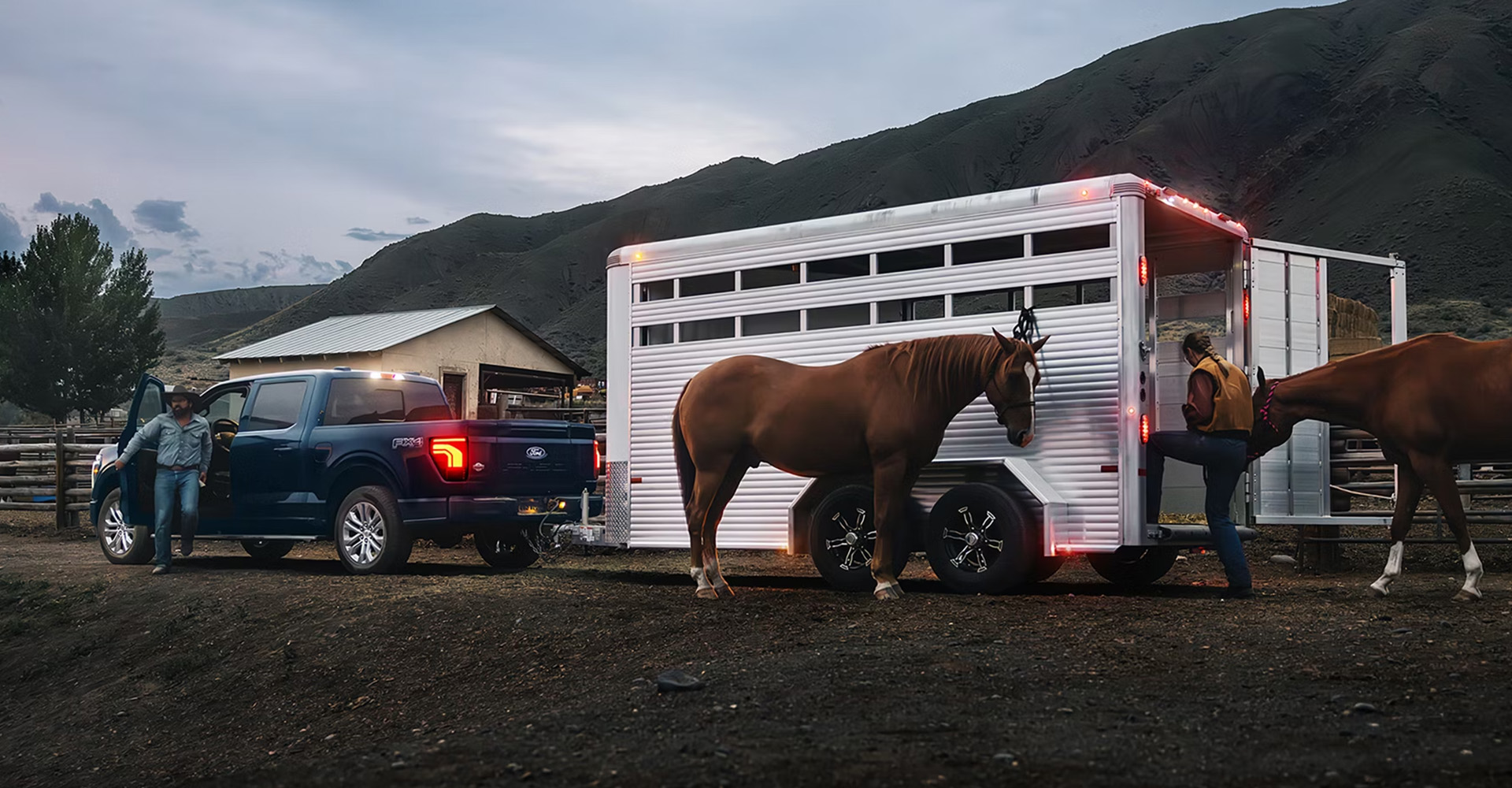
4L can help with controlled pulling on slippery ramps or steep, low-speed situations. Blanket towing claims are risky, so drivers should follow the manual for load limits, surface guidance, and whether low range is appropriate for that maneuver.
Mistakes to Avoid: What Can Happen If You Choose the Wrong Mode?
Using locked 4WD behavior on dry pavement can cause driveline binding, hopping in turns, and unnecessary wear, although the exact effects depend on the system. When to use 4A, 4H, and 4L is partly about avoiding misuse, because 4L is not for higher speeds, and 4WD does not help you stop faster on snow or ice. New owners also overestimate what 4WD can do. Overconfidence risk in 4WD is real because the vehicle may accelerate cleanly on snow while still needing a long stopping distance once braking begins.
Common “New Owner” Errors
Common mistakes include staying in 4H after roads dry out, trying to engage 4L without meeting shift conditions, accelerating too aggressively on ice, and relying solely on 4WD instead of winter tires or capable all-terrain tires. A Ford system can manage wheel slip, but no transfer case can replace tire grip.
How to Safely Select a Drive Mode
Most Ford vehicles use a 4×4 selector dial or 4×4 buttons, and the instrument cluster indicator lights confirm the selected mode. Small clunks or engagement noises can be normal because the transfer case and driveline components are physically changing state. Many systems allow 4A or 4H selection while moving under the right conditions, while 4L often requires low speed and Neutral. When to use 4A, 4H, and 4L also covers how to switch modes smoothly, as abrupt throttle inputs can delay engagement or cause unnecessary wheelspin.
If the System Won’t Shift Right Away
Ease off the throttle, roll straight, and avoid spinning the tires. If selecting 4L, momentarily stop and shift to neutral if your owner’s manual requires it, then try again.
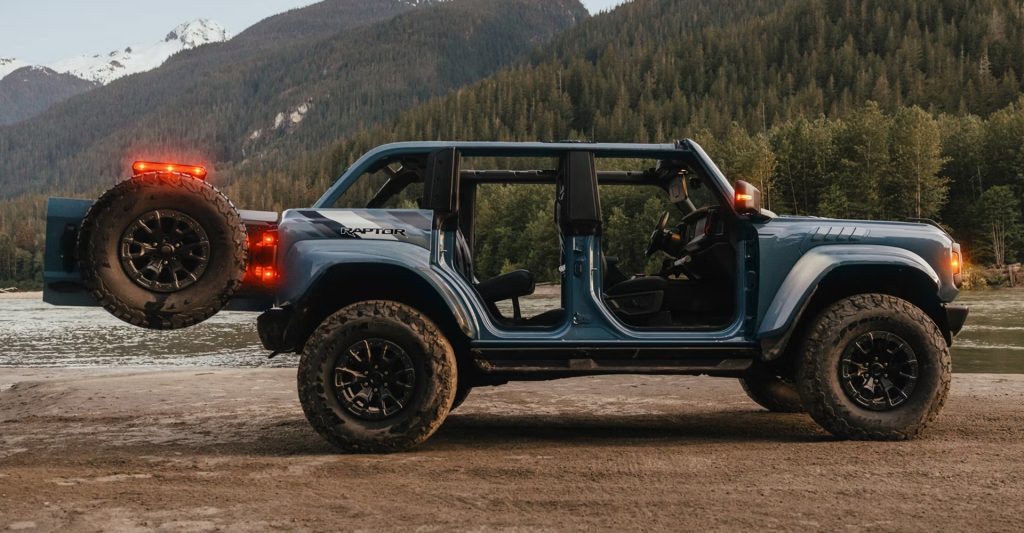
How Drive Modes Like Slippery, Mud/Ruts, and Sand Work With 4WD
Some Ford vehicles automatically pair terrain settings like Slippery, Mud/Ruts, and Sand with the 4WD selection, while others require the driver to choose both settings separately. These systems can adjust throttle mapping, traction control, stability control, and shift behavior, but they do not replace the correct choice of 4WD mode. That is why knowing when to use 4A, 4H, and 4L still matters even in vehicles with advanced software. Electronic helpers improve consistency, but the driver still has to match high-range or low-range gearing to the surface and the intended speed.
A Simple Way to Decide: Surface Consistency + Speed
If traction changes often, lean toward 4A. If the surface is consistently loose and you will keep moving at a moderate speed, choose 4H; if the terrain is slow and technical, choose 4L.
Choose the Mode That Matches the Surface and the Speed
The simplest summary is this: use 4A for changing traction, 4H for consistently slippery or loose surfaces, and 4L for low-speed torque and control. That is the clearest answer to when to use 4A, 4H, and 4L, and it applies whether you drive a Ford F-150, a Ford Bronco, or another SUV from the broader lineup of Ford models in Charleston, SC. Drivers who split time between pavement, winter weather, and trail access roads should practice mode changes in safe conditions and prioritize tire choice before technology. If you want help comparing 4WD systems across trucks and SUVs, including models like the Ford Explorer, or even broader Ford capability trends alongside Ford’s electric vehicles, Palmetto Ford in Charleston, SC, can help you sort out which setup fits how you actually drive.
FAQs
What is the difference between 4A and 4H on a Ford?
4A automatically shifts torque between the front and rear axles as traction conditions change, making it suitable for mixed conditions. 4H provides steadier 4WD for consistently slippery or loose surfaces and is not intended for dry pavement in many systems.
When should I use 4L instead of 4H?
Use 4L for low-speed control and extra torque on steep grades, deep mud, deep sand, or rough terrain. Use 4H when you need extra traction at higher speeds on snow, gravel, or dirt.
Can I drive in 4A all the time?
In many Ford systems, yes, especially when roads alternate between dry, wet, icy, or lightly snow-covered. Because model and trim differences matter, confirm recommended use in the owner’s manual.
Is it bad to use 4H on dry pavement?
On many systems, yes, because locked 4WD behavior can create driveline binding and tire scrub on high-traction pavement. If roads are dry, switch to the mode your manual recommends, often 2H or 4A, depending on the vehicle.
Does 4A, 4H, or 4L help you stop faster on snow and ice?
No. 4WD mainly helps the vehicle move and maintain traction, while stopping distance depends more on tires, speed, road surface, and following distance.
Connect with us

